
Low Impact Workout for Beginners at Home (Knee-Friendly, No Equipment)
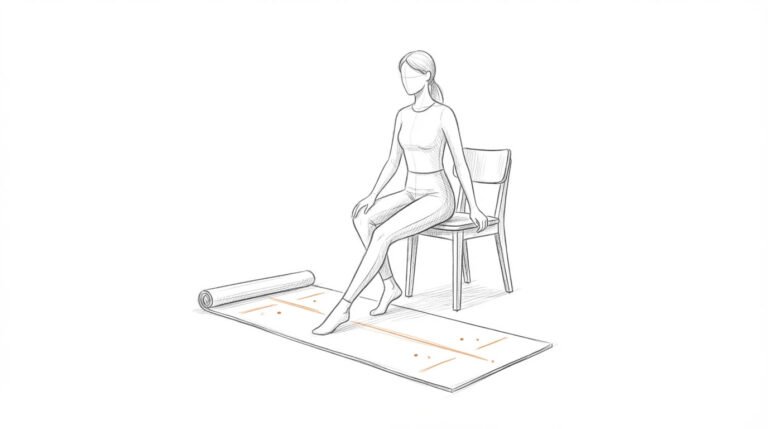
If you’re a beginner and high-impact workouts feel like too much—jumping, running, burpees—you’re not alone. Low impact workouts are one of the best ways to start because they’re easier on your joints while still building strength, stamina, and consistency.
This beginner low impact workout is:
- No jumping
- No equipment
- Knee-friendly options included
- Easy to repeat 3–5 days per week
Note: This is educational content, not medical advice. If you have pain or injuries, consult a qualified professional.
What “low impact” really means
Low impact doesn’t mean “easy.” It means at least one foot stays closer to the ground and movements reduce pounding on your joints. You can still get a great workout with:
- controlled strength moves
- steady low-impact cardio
- mobility and stretching
The 12-minute low impact workout (beginner-friendly)
Workout structure
- 2 minutes warm-up
- 8 minutes low-impact circuit
- 2 minutes cool-down/stretch
If you need the shortest version, do the circuit once and stretch.
Minute 0–2: Warm-up (2 minutes)
Do each for ~30 seconds:
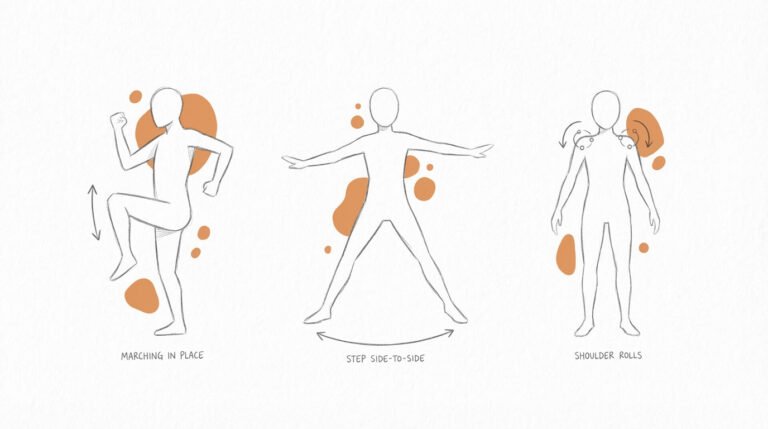
- March in place
- Step side-to-side
- Shoulder rolls + arm swings
- Gentle hip circles
Minute 2–10: Low-impact circuit (8 minutes)
Do 40 seconds work / 20 seconds rest for each move.
Beginner option: 30/30 timing.
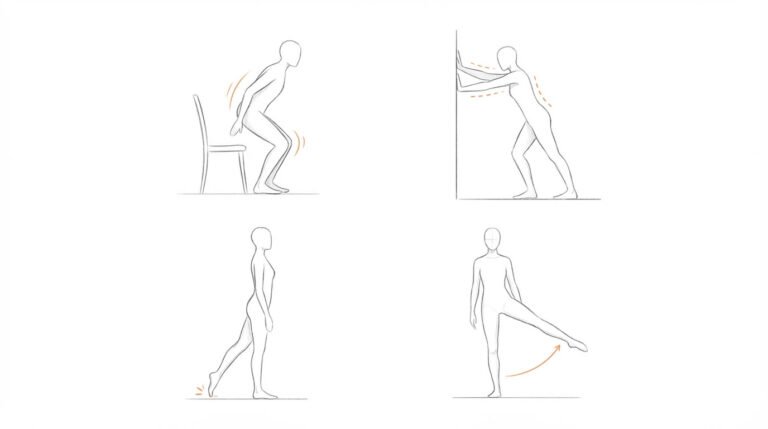
Move 1: Sit-to-stand (chair squats)
- Stand up from a chair and sit down slowly.
Knee-friendly tip: keep your range of motion comfortable.
Move 2: Wall push-ups
- Hands on wall, body straight, lower and push.
Modification: stand closer to the wall.
Move 3: Step-back taps (no lunge)
- Step one foot back, tap the floor, return. Alternate sides.
Goal: cardio + coordination without impact.
Move 4: Standing side leg lifts (hips + balance)
- Lift leg to the side slowly, control down.
Modification: hold a chair for support.
Move 5: Glute bridges
- Lift hips and squeeze glutes at the top.
Modification: hold for 2 seconds at the top.
Move 6: March + reach (low-impact cardio)
- March in place while reaching arms overhead.
Modification: reduce arm height if shoulders are sensitive.
Minute 10–12: Cool-down (2 minutes)
Hold each for ~45–60 seconds:
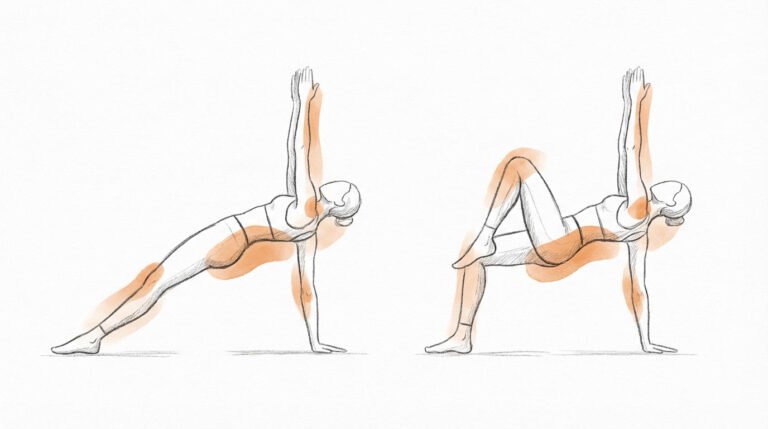
- Hamstring stretch
- Chest opener or shoulder stretch
Optional: 30 seconds slow breathing.
How often should beginners do this?
Beginner schedule (recommended)
- 3 days/week: Mon/Wed/Fri
- Optional: add a 10-minute walk on Tue/Thu
If you want 5 days/week
Alternate:
- low-impact workout day
- walking + mobility day
Progression plan (4 weeks)
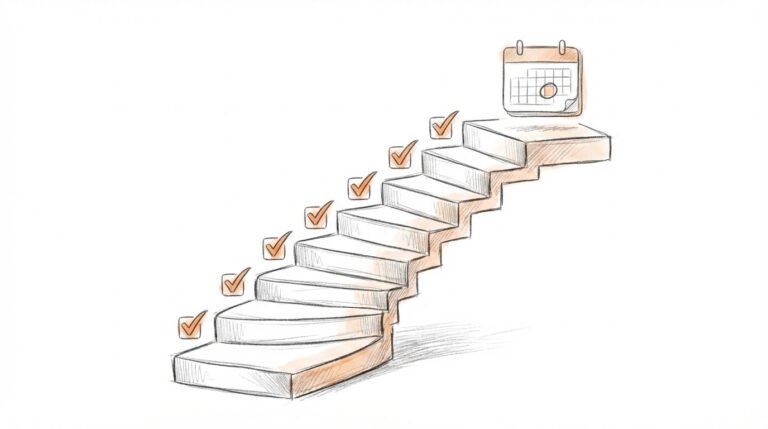
Week 1
- 30/30 timing
- 3 days/week
Week 2
- 40/20 timing
- 3 days/week
Week 3
- Add a 4th day (optional)
- Keep timing the same
Week 4
- Add a second circuit round OR add 1–2 reps per move
Common mistakes (and what to do instead)
Mistake 1: Thinking low impact won’t work
Fix: low impact builds consistency, strength, and stamina when repeated.
Mistake 2: Doing too much too soon
Fix: start with one round and build.
Mistake 3: Skipping mobility and stretching
Fix: keep the cool-down—your joints will thank you.
Mistake 4: Not tracking your workouts
Fix: a simple checklist keeps you consistent.
Want a simple system to track your workouts and progress?
If you want one place to track:
- workouts completed
- daily movement
- meals + hydration
- habits + weekly check-ins
I built a paid Notion Wellness Tracker designed to make consistency easier for beginners.
Get it here:
https://wellnessfitnessunitt.com/notion-wellness-tracker/
FAQ
Is low impact good for weight loss?
Low impact can support weight loss when combined with consistency and nutrition habits. It’s a strong beginner starting point.
What if I have knee pain?
Use chair sit-to-stand, avoid deep bending, and keep movements controlled. If pain is sharp, stop and consult a professional.
Can I do this every day?
You can do low-impact movement daily, but alternate intensity and include mobility/walking days.
Conclusion
Low impact workouts are one of the best ways to start at home as a beginner. No jumping, no equipment, and joint-friendly options—done consistently, they build real momentum.